

30 hours over 3 days, with online learning resources
G2B — Automotive Locksmithing & Key Programming. Diagnose, manipulate, and restore vehicle locking and immobilizer systems, including electronic files, key and transponder programming, vehicle opening, lock decoding, and coding adaptation.
Duration and price: 30 hours over 3 days. $2,490 USD per participant. Payment by card or ACH; company invoicing available.
Training location: Brickell City Center, 78 SW 7th Street, Miami, FL 33130, USA.
Learner profiles: Professionals and individuals, including locksmiths, mechanics, automotive technicians, and programming specialists.
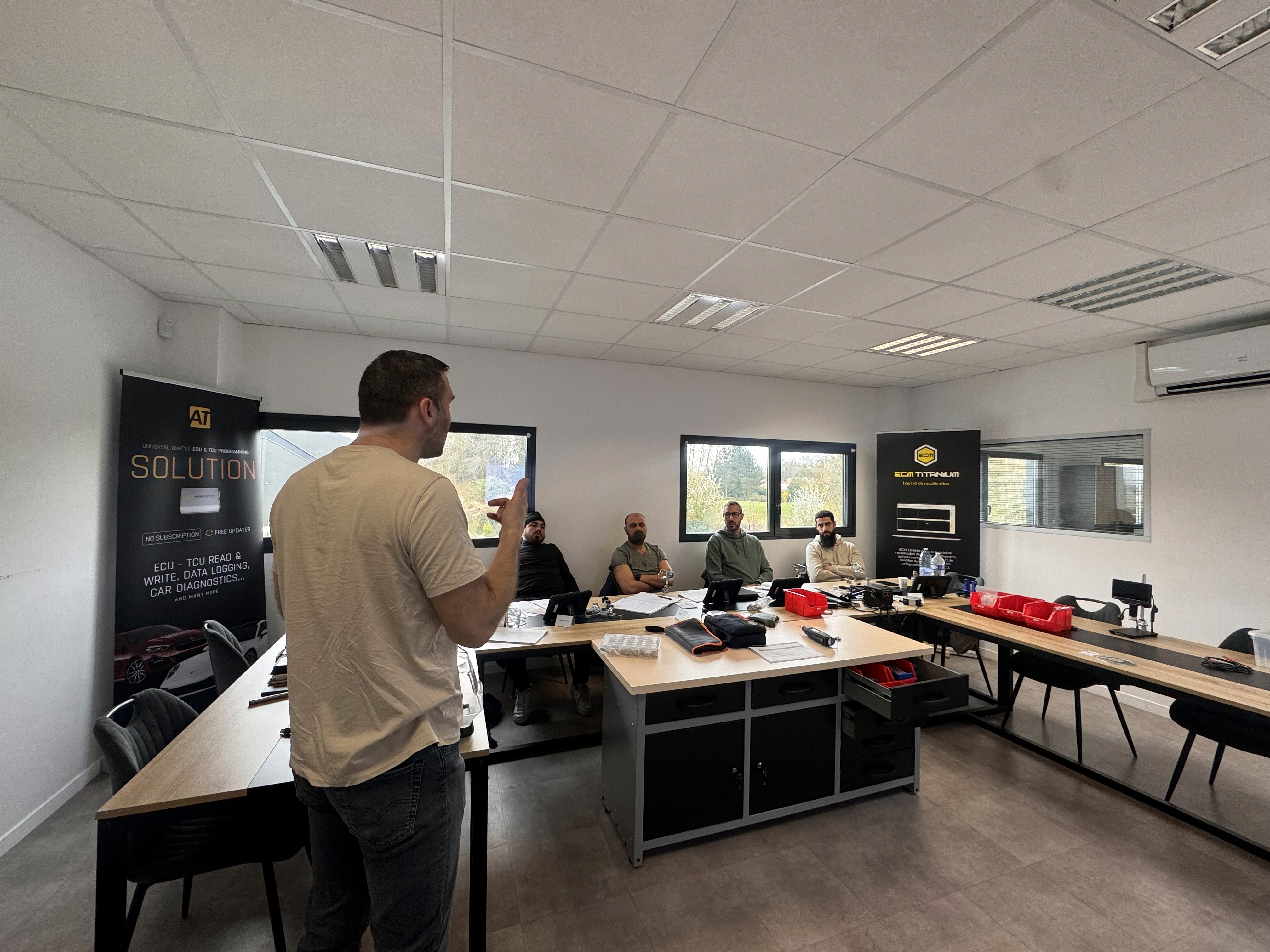
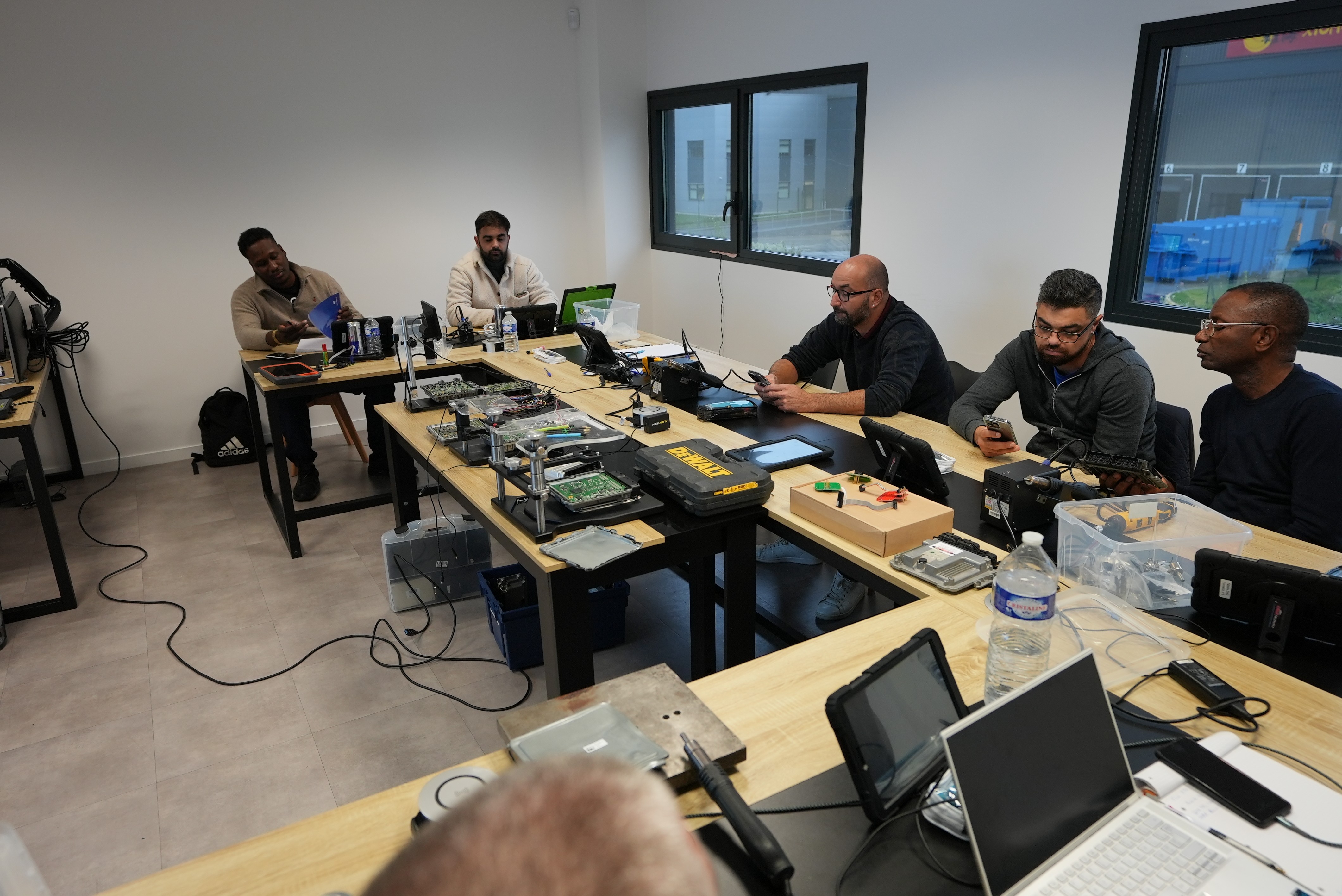
Hybrid learning: Expert-led theory and hands-on practice with real-world cases, remote access to theoretical courses at your own pace, and learning materials that remain available after training. Resources include thematic units, PCB soldering and desoldering exercises, slideshows, interactive materials, and multiple-choice quizzes.
Enrollment: Open year-round, with sessions every month. Training can begin within 30 days of first contact, depending on your preferred period. Enrollment confirmation is sent before training.
Assessment and completion: Initial and final assessments evaluate your starting level and acquired skills. An EMS Certificate of Completion states the objectives, nature, and duration of the program. It is not a license or state certification; enrollment does not constitute state approval. Course materials: https://ems.digiforma.net.
Accessibility and special needs: Contact contact.usa@ems-electronics.com to discuss participation options.
Professional conduct: Vehicle opening and key programming are performed only for the verified owner or an authorized party. Participants learn to verify identity and ownership before any intervention. Access to manufacturer security data may require registration as a NASTF Vehicle Security Professional.
INTRODUCTION & PRESENTATION
What you will learn
C1
C1. Identify and analyze immobilizer systems, their communication protocols, component roles, and interactions to diagnose faults and select an appropriate intervention.
C2
C2. Modify immobilizer files using EEPROM/MCU structures, component reading, soldering and desoldering, and file editing tools to extract security data, prepare key programming, or repair dumps.
C3
C3. Identify keys and transponders, check their condition with diagnostic tools, and understand universal transponders to prepare reliable programming.
C4
C4. Program keys and transponders with professional interfaces such as Autel and Xhorse. Understand tool capabilities and limitations, recognize counterfeit tools, and select the appropriate platform workflow.
C5
C5. Identify key blanks and analyze lock profiles and decoding methods to select the correct blank and prepare accurate reproduction.
C6
C6. Open vehicles using lock picking, gap techniques, lock extraction, or electronic unlocking, selecting a safe and appropriate method.
C7
Decode locks and ignition barrels using Lishi tools, turbo decoders, wafer inspection, and profile-specific methods.
C8
Cut and engrave keys, interpret cut codes, replace wafers, and adapt a lock to a key.
Professional conduct
Verify identity and vehicle ownership or authorization before every intervention.
Build operational skills in modern automotive locksmithing: immobilizer protocols, electronic files, transponders, programming tools, and platform-specific procedures.
Core electronic modules:
C1: Identify immobilizer components and analyze their roles, operation, and interactions.
C2: Read and modify immobilizer files; work with secure processors and practice component soldering and desoldering.
C3: Identify transponders, check functionality, and select suitable universal transponders.
C4.1: Mercedes-Benz, BMW, JLR, and VAG. C4.2: Ford, GM, Toyota/Lexus, Nissan, Kia/Hyundai, FCA/Stellantis, Volvo…..
Select suitable blanks and opening methods for each vehicle and lock profile.
Practical skills:
Identify key blank types and the vehicles they fit.
Recognize lock profiles and select the appropriate decoding method.
Practice non-destructive vehicle opening and lock picking.
Use gap/wedge techniques or lock extraction when appropriate.
Perform appropriate electronic unlocking.
Choose an opening technique with or without destruction according to the situation.
Understand lock mechanisms, decode cut patterns, and produce precise, functional keys.
Hands-on techniques:
Compare Lishi tools, turbo decoders, and other lock-opening equipment.
Examine locks and apply a method suited to each common profile.
Interpret wafer positions and recognize wear or broken springs.
Key cutting and lock assembly:
Disassemble and reassemble locks and replace wafers.
Interpret cut codes and operate key-cutting machine interfaces.
Adapt a lock to a key and create a new coding.
Achieve precise, functional cuts with correct blank selection and cutting techniques.
Test reassembled locks and verify key operation.
CONCLUSION
Hands-on practice, expert trainers, and an EMS Certificate of Completion—not a license or state certification.
VOUS AVEZ ENCORE DES DOUTES ?
FAQs
Here are the answers to the questions we are most often asked.
Who are EMS programs designed for?
Where do classes take place?
When can I enroll, and how does it work?
Are there financing or funding options available?
Do I need prior experience to join a full certification program?